The canvas is finally
catching up to the art.
AI art has spent a decade outrunning the surfaces built to show it. As Refik Anadol opens DATALAND in Los Angeles and Micro LED breaks the half-millimetre barrier at InfoComm 2026, the two curves are about to meet. That meeting point is where Pixals lives.
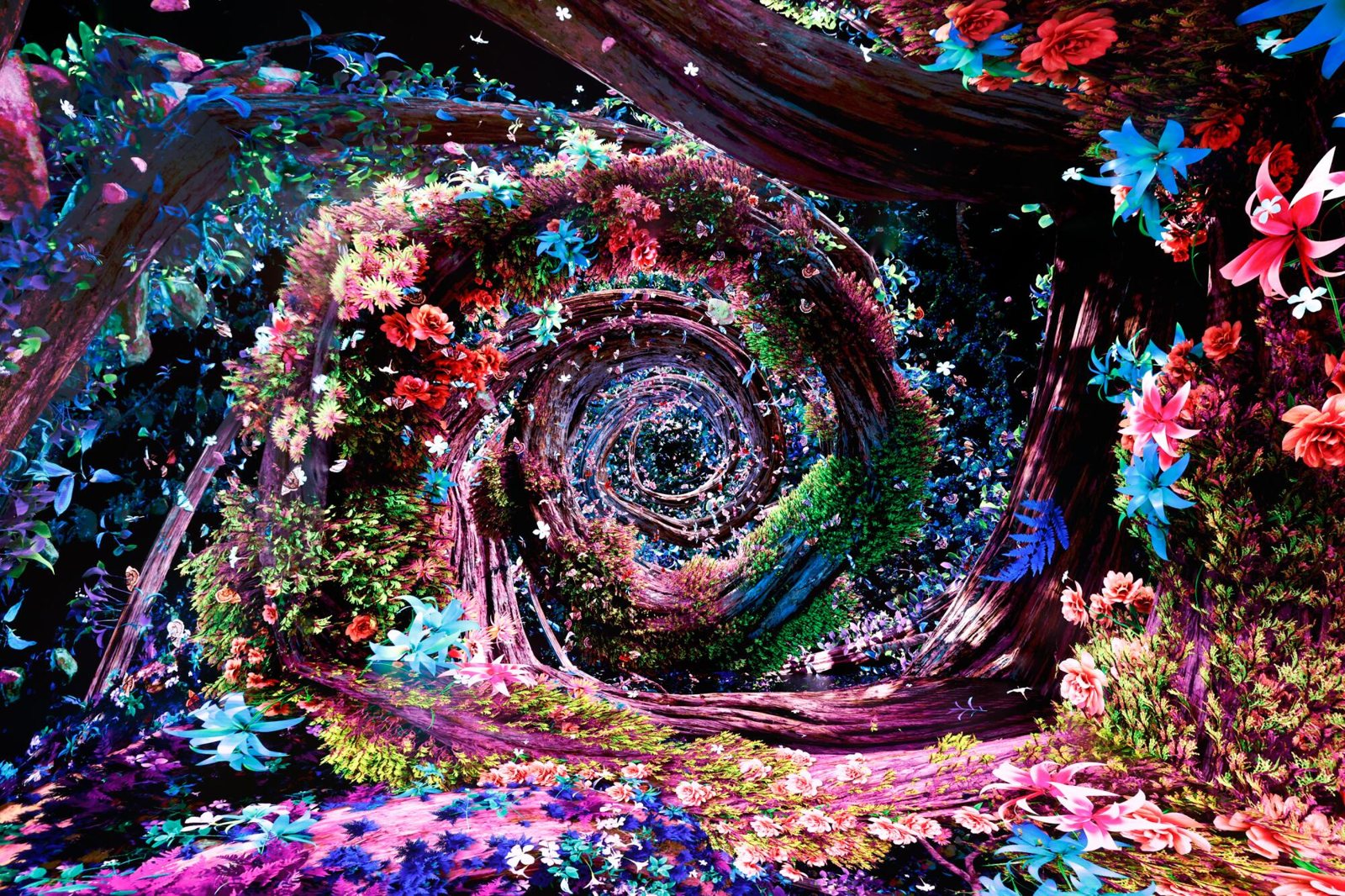
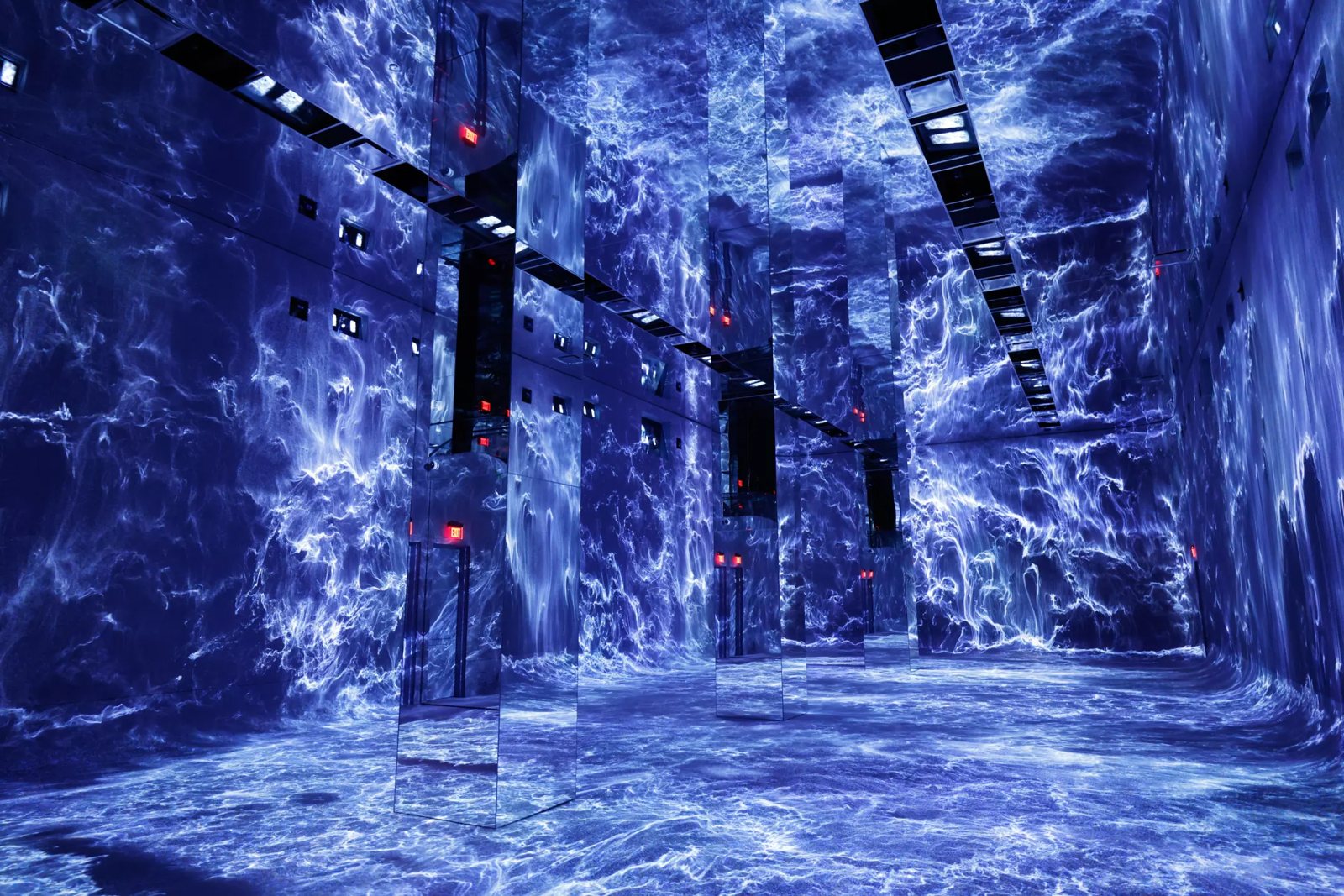
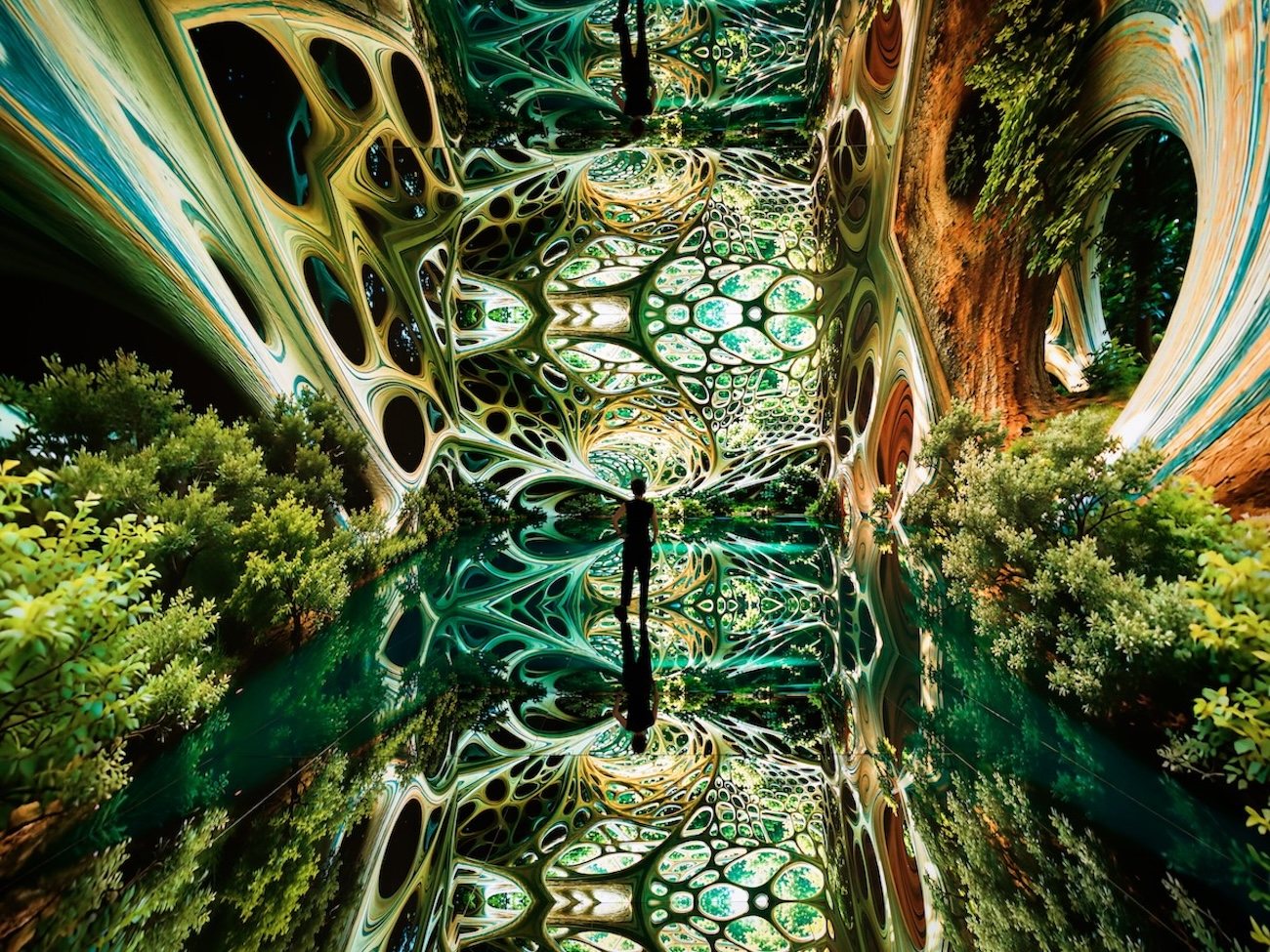
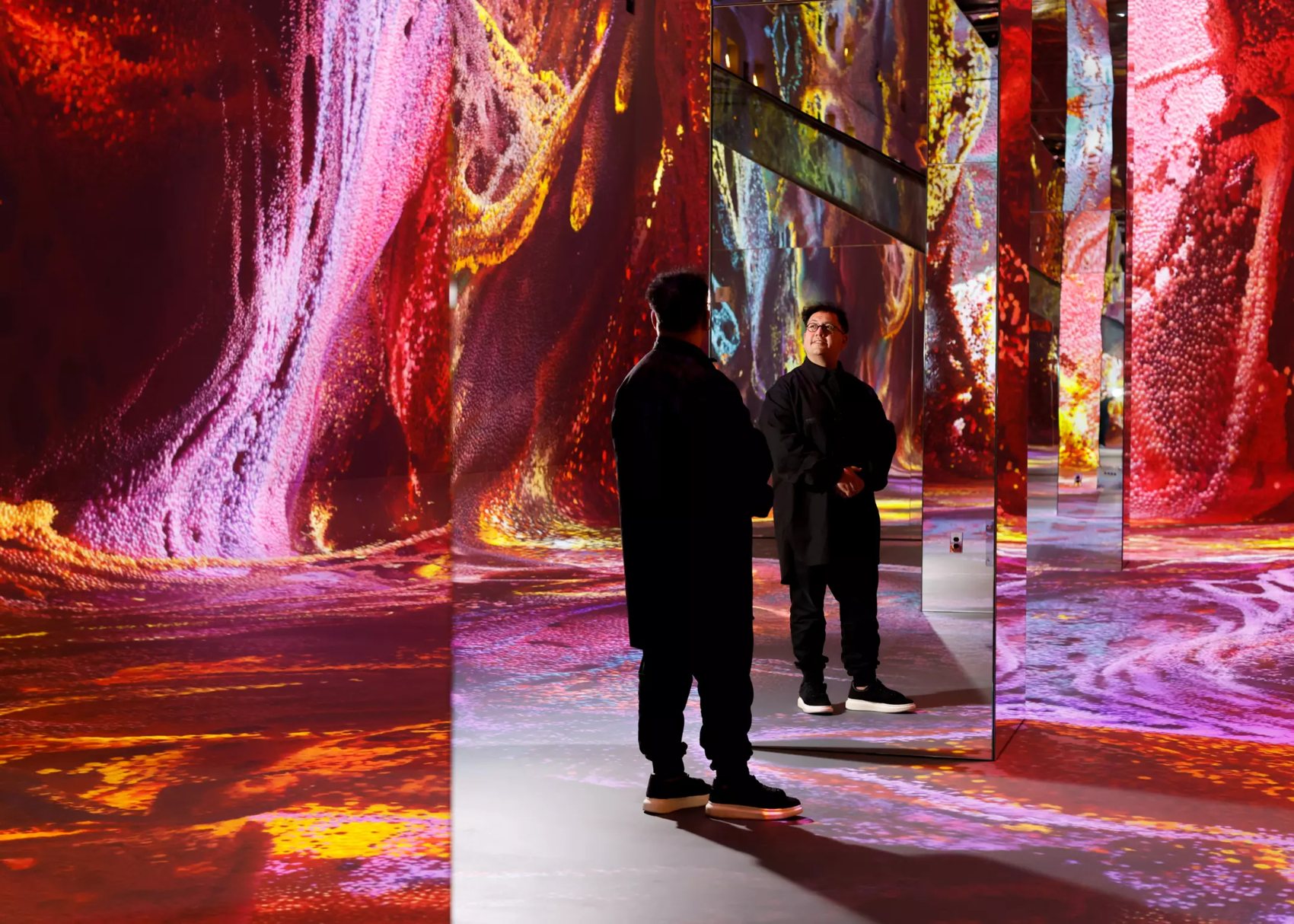
Something quietly historic happened this season. On June 20, the artist Refik Anadol opened DATALAND inside The Grand LA — Frank Gehry’s development on Grand Avenue in downtown Los Angeles — billing it as the world’s first museum devoted entirely to art made with artificial intelligence. Across 25,000 square feet, the inaugural show, Machine Dreams: Rainforest, runs on a “Large Nature Model” trained on first-hand data from sixteen rainforests, with image and sound archives from the Smithsonian, the Cornell Lab of Ornithology and London’s Natural History Museum. This is not a screening room. It is data rendered as weather, scent and light, responding to the people standing inside it.
Anadol is the right artist to plant this flag. His monumental, data-driven work has already wrapped The Sphere in Las Vegas, Casa Batlló in Barcelona and the facade of MoMA. A few miles of cultural distance from DATALAND, the auction houses have been moving in the same direction: AI and generative works now appear in roughly a third of fine art sales, and the buyers are younger than the rooms have ever seen. At a recent Christie’s “Augmented Intelligence” sale, nearly half the bidders were millennials and Gen Z.
The numbers underneath this are not a fad. Analysts size the AI-generated art market at around $3.2 billion in 2024, on a path toward $40 billion within the decade. A new kind of collector has arrived: digitally fluent, comfortable with work that moves and rewrites itself, and far less attached to a frame on a wall.
And yet, for all of that momentum, the most important constraint on this art form has almost nothing to do with the art. It is the surface it lives on.
The surface was always the bottleneck
Generative and AI-driven art is, by nature, large, luminous and alive. It is built to wrap a room, to breathe across an entire wall, to shift in real time. For years the only ways to present it at scale were projection, which washes out the moment a single light is switched on, or tiled flat panels, which carve a grid of seams straight through the image. Either way, the work arrived compromised. The artist imagined an unbroken field of light; the building delivered a rectangle with lines through it.
A generative artwork does not fail in the studio. It fails on the wall, the moment a seam cuts through it or the sun reaches the glass.
This is why so much ambitious digital art has, until now, only truly worked inside dedicated, blacked-out installations. The art was ready for architecture. The architecture was not ready for the art.
What changed at InfoComm 2026
That gap is closing fast, and the evidence was on the show floor in Las Vegas this month. At InfoComm 2026, the headline was no longer brightness or size. It was pitch — how close together the individual points of light sit — and the numbers crossed a threshold that matters for interiors.
Planar introduced proprietary Micro LED subpixels as small as 20 micrometres, supporting pixel pitches below 0.4mm. DreamWall entered with COB-engineered walls reaching down to 0.7mm. And Micro COB — chip-on-board construction that buries each diode in a protective, seamless resin — emerged as the fastest-growing segment of the entire category, with revenue roughly doubling on the year.
Translated out of the spec sheet: the screen has become fine enough, seamless enough and durable enough to be treated as a finish material. Not a display bolted to a wall. A wall.
Why this is the Pixals thesis
At Pixals we have argued one idea from the beginning: a screen is not a canvas until the seam disappears. Everything we build — our AURA Micro LED systems, our work with architects and developers, our installations for showrooms and residences — starts from that single conviction. The display should read as part of the building and disappear into it, so that what remains is the work itself.
The convergence now underway is the validation of that thesis. On one side, a generation of artists and collectors is treating moving, generative, AI-assisted imagery as serious work worth living with. On the other, the canvas has finally reached the resolution, the seamlessness and the brightness to do that work justice in a lobby, a flagship or a home, in full daylight, with no grid running through it.
DATALAND is a museum. The more interesting frontier is everything that is not a museum: the private residence whose entry wall is a living Anadol-scale field of light, the flagship whose entire façade becomes a generative artwork, the corporate lobby that holds a commissioned digital piece the way an older building held a mural. For the first time, the surface is no longer the reason that vision stays on the moodboard.
The art went architectural. Now the architecture can finally hold the art.
The Pixals view
If you are an architect, a collector or a developer watching AI and digital art move from the screen into the room, the question is no longer whether the medium is real. The market has answered that. The question is what surface is worthy of it — and that is a decision made at the design stage, in millimetres of pixel pitch, in brightness headroom, in whether the wall has a seam.
That is the conversation we have every day. If you are weighing a digital art surface for a project — a residence, a flagship, a development — and want a straight, design-led recommendation rather than a product pitch, start one at www.pixals.net. And if you are still deciding between formats, our companion piece, Flat Panel vs Modular Micro LED Video Walls, breaks down exactly why the seam decides everything.
LED Wall Central — LED innovations at InfoComm 2026
Artsy — Why AI art is winning over young collectors
Images: DATALAND, Los Angeles — Machine Dreams: Rainforest, the Gallery C Infinity Room, and mirrored data environments. Courtesy of Refik Anadol Studio / DATALAND. Used for editorial illustration.